


“Mom, can you hand me that book?”, “Dad, I can’t reach the blocks!”, “Can you help me find my crayons?” – similar requests appear in many homes every day. We often treat them as a natural part of childhood, but the Montessori method shows that some of these situations arise not from the child’s age, but from the way the space is organized. When the environment is adapted to the capabilities of the youngest, daily activities become an opportunity to learn independence. This is why Montessori furniture has been popular for years among parents who want to support their child’s development in a natural way. It is worth taking a closer look at how specific furniture solutions influence a child's daily habits and help build their independence.
A child's independence at home begins with a well-designed space
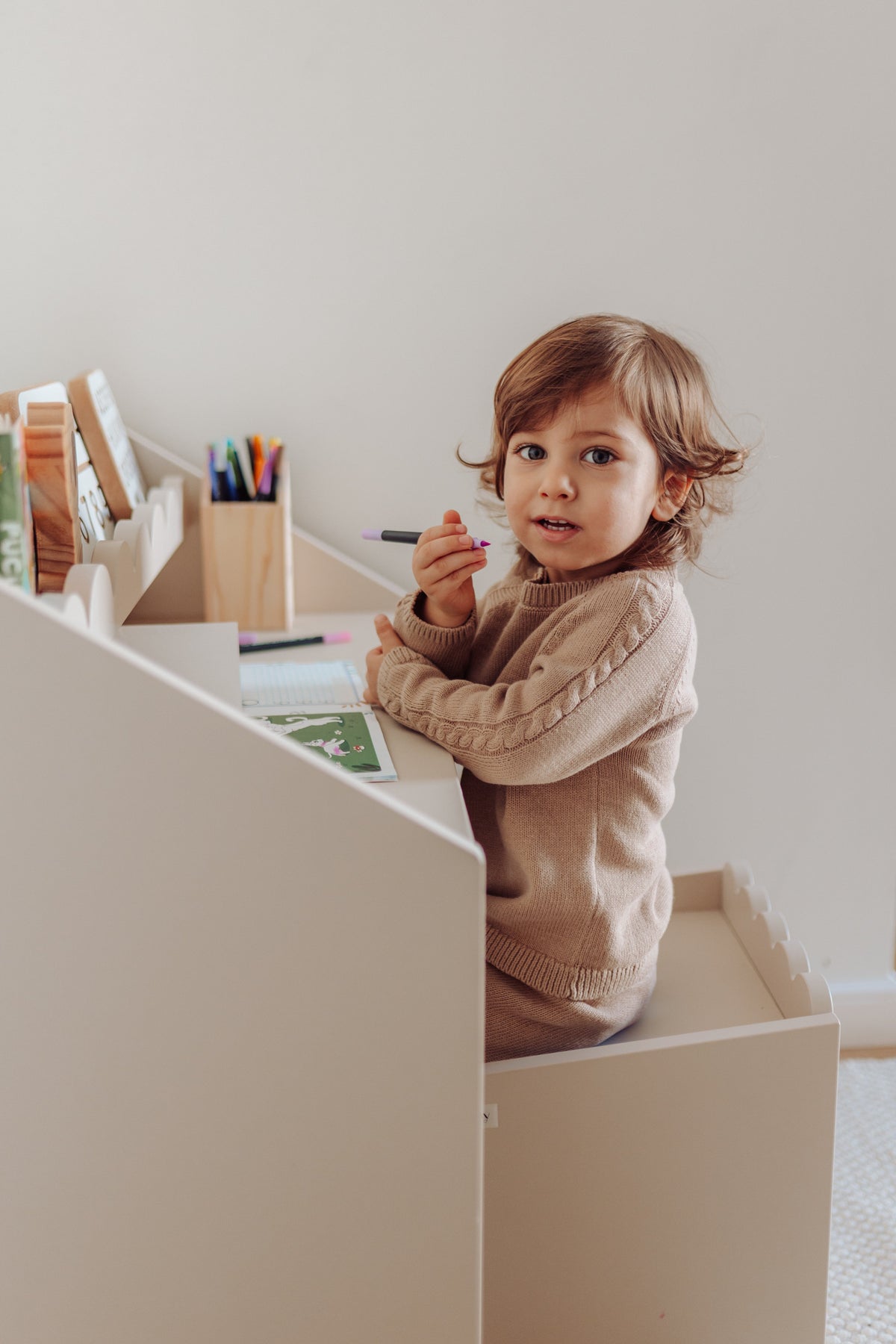
Maria Montessori observed that children have a strong need to act and explore the world on their own terms. The problem arises when the environment is created exclusively from an adult's perspective. High shelves, hard-to-reach cabinets, or heavy drawers mean that the child almost constantly has to ask for help. Meanwhile, independence develops through repeating simple actions. When a child can pick out a book, put away a toy, or prepare a play area themselves, they build a sense of agency. Over time, this translates into greater self-confidence, responsibility, and better organization of daily activities. This is precisely why Montessori furniture is designed so that a child can use it without adult support.
Montessori shelves teach order better than constant reminders
Many parents are familiar with the situation where toys end up in one large bin, and after a few days, chaos reigns in the room again. This is not due to the child's laziness. Most often, the problem is the storage method. Montessori shelves help organize the space in a more intuitive way. Low shelves allow books, puzzles, or art supplies to be displayed, so the child immediately sees what they can use. This solution supports the development of several important skills:
-
independent decision-making,
-
maintaining order,
-
focusing on one activity,
-
responsibility for their own belongings.
When everything has its place, putting items away becomes a natural part of play, rather than an unpleasant chore imposed by adults.
How to furnish a Montessori room without a major renovation?
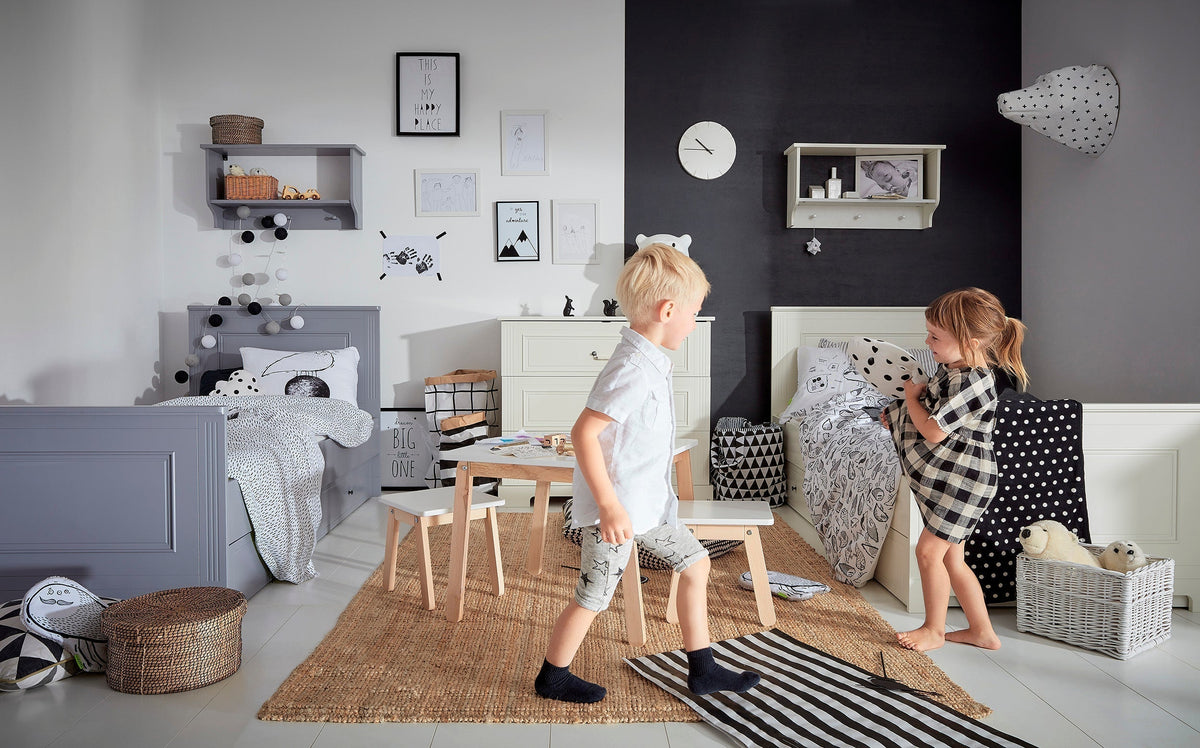
If you're wondering how to furnish a Montessori room, start by observing your child. Check which items they use most often and if they can reach them independently. Limiting the number of toys visible at once is also a good step. An excess of stimuli makes it difficult to concentrate and often leads to quick boredom. It's much better to have fewer items but ensure easy access to them. It's also worth paying attention to muted colors for the furnishings. A calm arrangement promotes concentration and doesn't distract from the activities the child is engaged in.
Why does a bed support the development of independence?
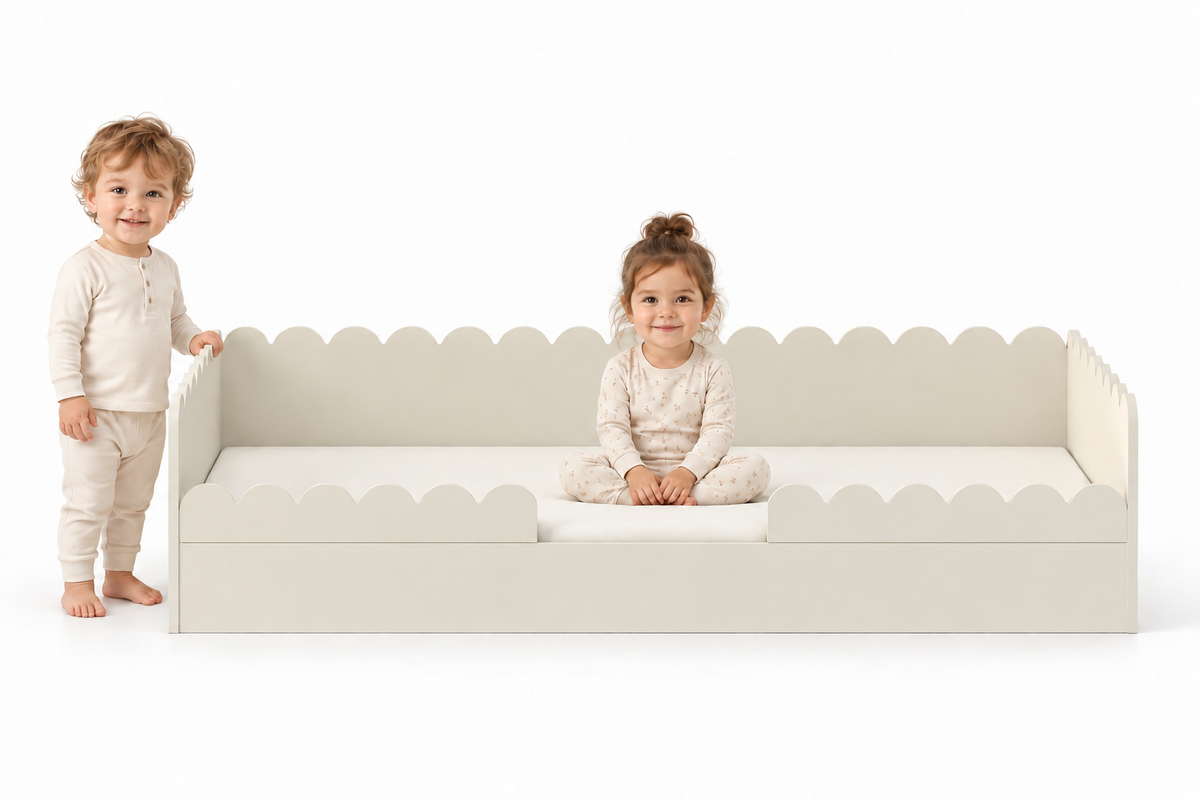
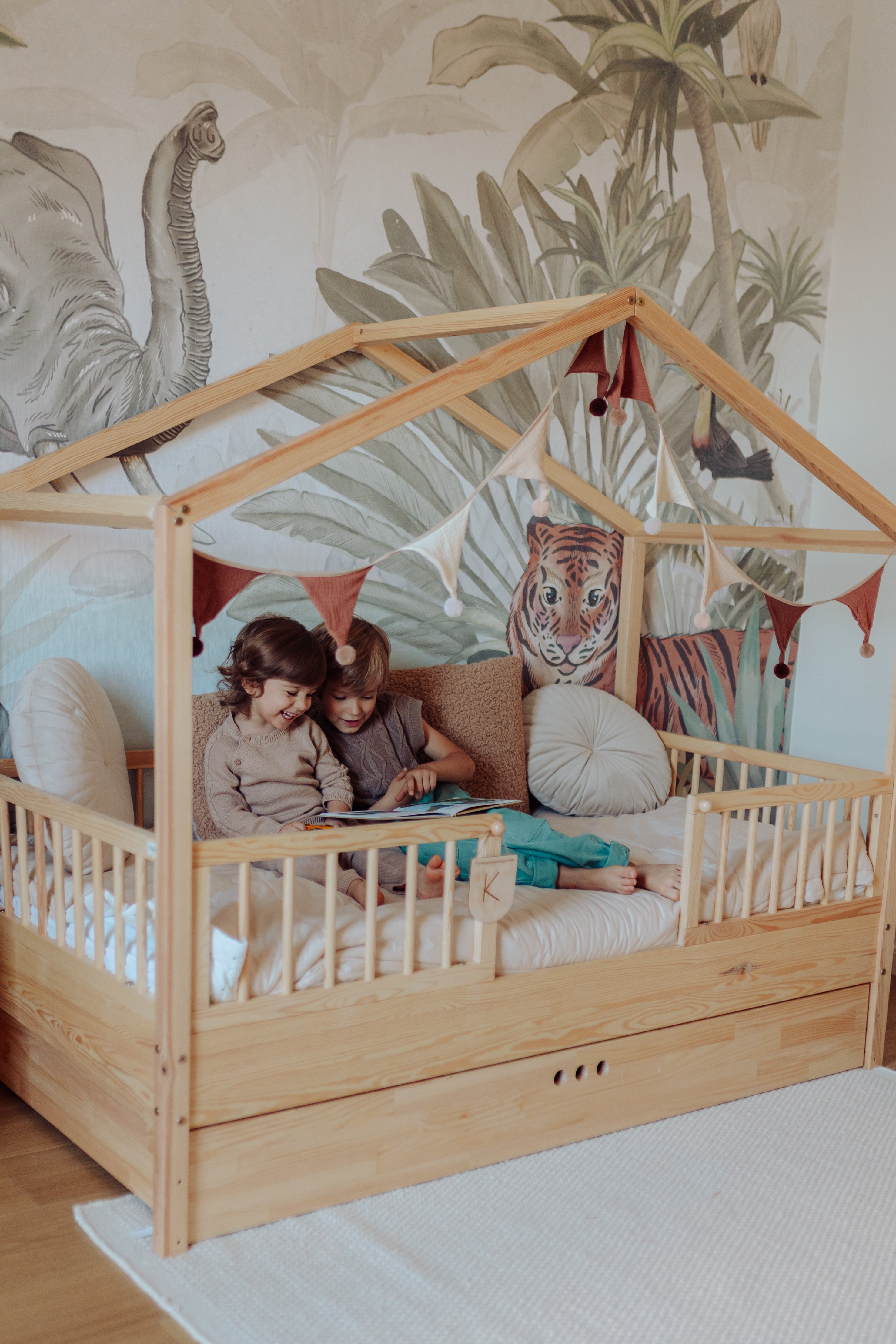
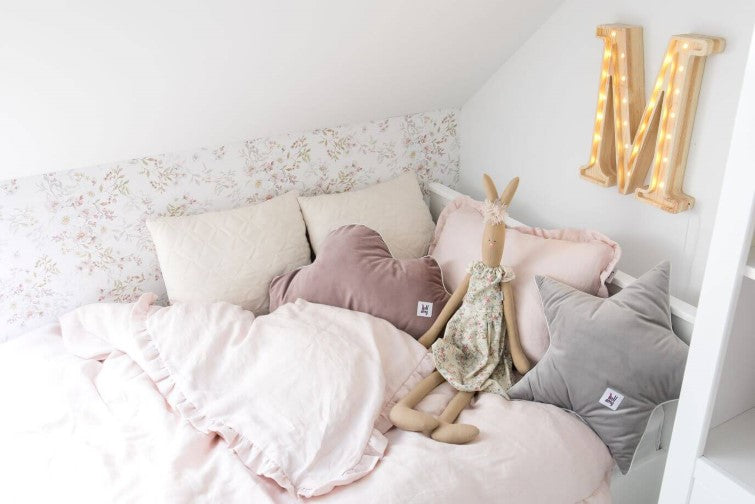
Although shelves and bookcases are most often discussed, a bed designed according to Montessori principles also plays a significant role. Its characteristic feature is the low position of the mattress, which allows the child to get in and out of bed independently. This may seem like a minor detail. In reality, it allows the youngest to make their first independent decisions related to rest and daily routines. The child is not a passive participant in the day, but actively uses the space prepared for them. Parents also often notice that low beds help build a greater sense of security. The room becomes an accessible and understandable place, not a space full of limitations.
Furniture solutions that grow with your child
At Bellamy, when creating children's room furnishings, we pay attention to ensuring they support the development of independence not just for a few months, but for many years. For this reason, we place great importance on functional details. In our collections, you can find, among other things, shelves with easily accessible compartments, spacious drawers, and practical recesses that help organize space. An example is the Tatam series, designed with little explorers in mind. Geometric forms, neutral colors, and well-thought-out storage spaces make the furniture easy to adapt to the child's changing needs and various interior arrangements. Most importantly, however, these solutions encourage the youngest to act independently every day.
Create a space for your child to explore the world
Independence doesn't appear suddenly; it develops through hundreds of small actions performed daily – from reaching for a favorite book to putting toys away. Well-designed Montessori furniture helps children develop these skills at their natural pace and build self-confidence from an early age.
If you're looking for Montessori inspiration and solutions to support your child's development, explore Bellamy collections. A properly organized space can become one of the most valuable tools for fostering independence.
Questions about Montessori furniture for children
1. Is Montessori furniture only suitable for young children?
No. Montessori principles can also be applied in rooms for preschoolers and school-aged children. It is important that the furniture is adapted to the current needs and height of the user.
2. What Montessori furniture should be introduced first?
Most parents start with a low bookcase and easily accessible storage for books and toys. Such changes quickly impact a child's daily habits.
3. Does a Montessori room have to be minimalist?
It's not about a stark decor, but about limiting an excess of stimuli. The space should be organized and functional, yet child-friendly.
4. Is a Montessori bed a good solution for a toddler?
Yes. The low design supports independence and also allows the child to freely use their own space for an extended period.



Udostępnij:
How to choose the right size fitted sheet for a cot or mattress?
How to choose furniture size according to a child's height?