

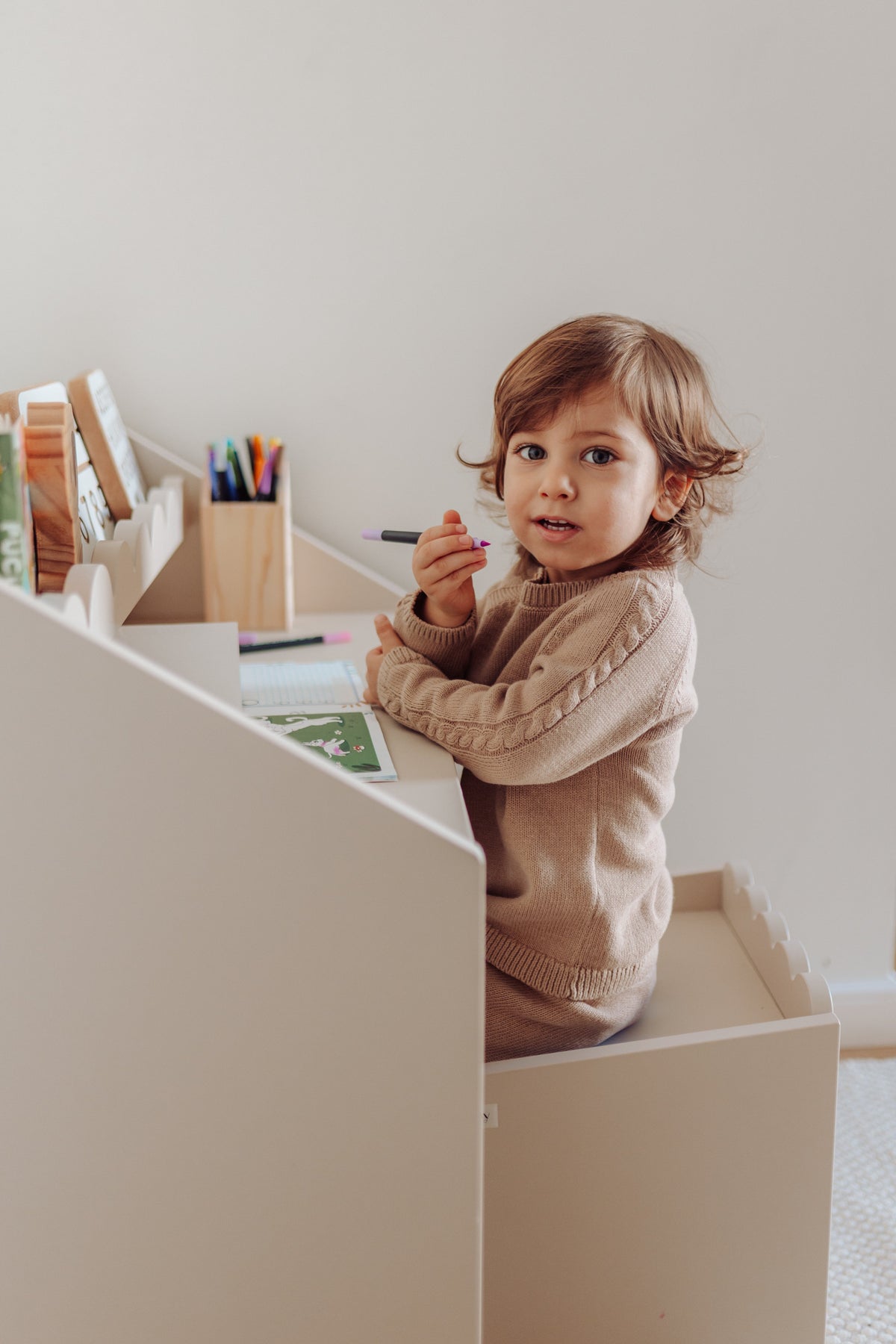
When choosing furniture for a child's room, parents often focus on appearance, colors, or storage space. However, their dimensions are equally important. Properly selected furniture affects the comfort of daily functioning, supports correct posture, and encourages the child's independence.
A child spends many hours each week at a desk, table, or bookcase. If the furniture is too high or too low, it can lead to incorrect postural habits, faster fatigue during study, and limited independence.
From this article, you will learn:
-
how to choose furniture based on a child's height,
-
what the height of a desk and chair should be,
-
how to arrange a functional Montessori room,
-
why it's worth choosing furniture that grows with your child.
Why does furniture size matter?
Children grow very quickly, especially during preschool and early school age. Furniture that was perfect a year ago may now be uncomfortable.
Poorly selected equipment can cause:
-
slouching while drawing and studying,
-
lack of foot support,
-
tension in neck and back muscles,
-
faster fatigue while sitting,
-
difficulty independently using shelves or storage compartments.
Well-matched furniture helps maintain proper posture and allows the child to use their space independently.
How to choose a desk and chair for a child's height?
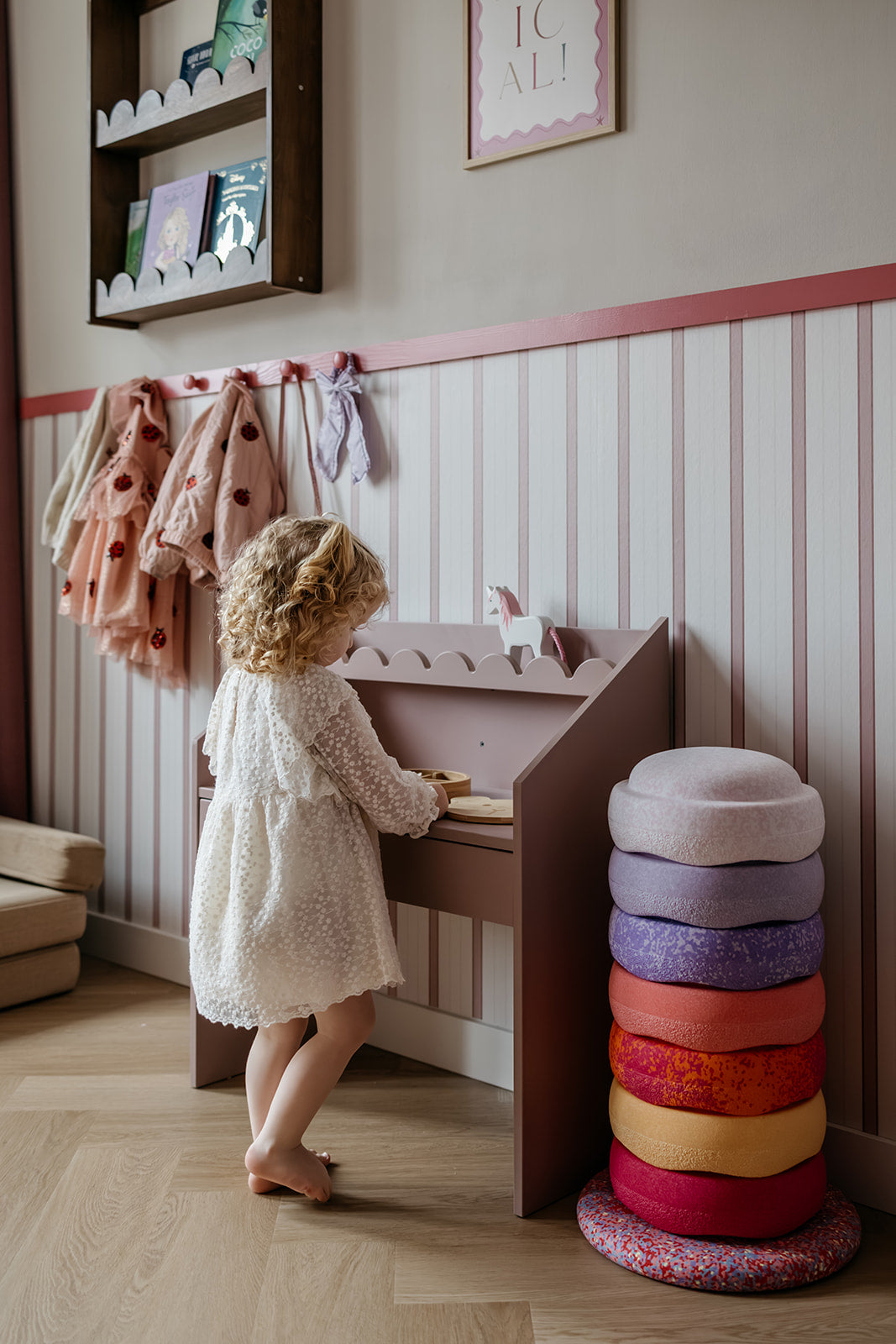
While sitting, the child should:
-
rest their entire feet on the floor,
-
have their knees bent at an angle of about 90 degrees,
-
keep their back supported by the chair's backrest,
-
comfortably rest their forearms on the tabletop.
If the child has to pull their shoulders up or lean excessively forward, it means that the furniture height is not properly adjusted.
Approximate furniture dimensions according to child's height:
| Child's Height | Seat Height | Tabletop Height |
|---|---|---|
| 95–110 cm | 26 cm | 46 cm |
| 110–125 cm | 30 cm | 52 cm |
| 125–140 cm | 34 cm | 58 cm |
| 140–160 cm | 38–42 cm | 64–70 cm |
| above 160 cm | 44–46 cm | 72–75 cm |
The above values are approximate. The most important thing is to observe the child during daily activities and adapt the equipment individually.
How to check if the furniture is well-matched?
Perform a simple test before purchasing.
Checklist for parents:
✓ Child's feet rest flat on the floor.
✓ Knees form an angle of about 90 degrees.
✓ There is free space between the knees and the tabletop.
✓ Shoulders are relaxed.
✓ The child does not have to lean their head excessively forward.
✓ Most frequently used items are within arm's reach.
If most answers are "yes," the furniture is likely well-matched.
Montessori furniture and child's independence
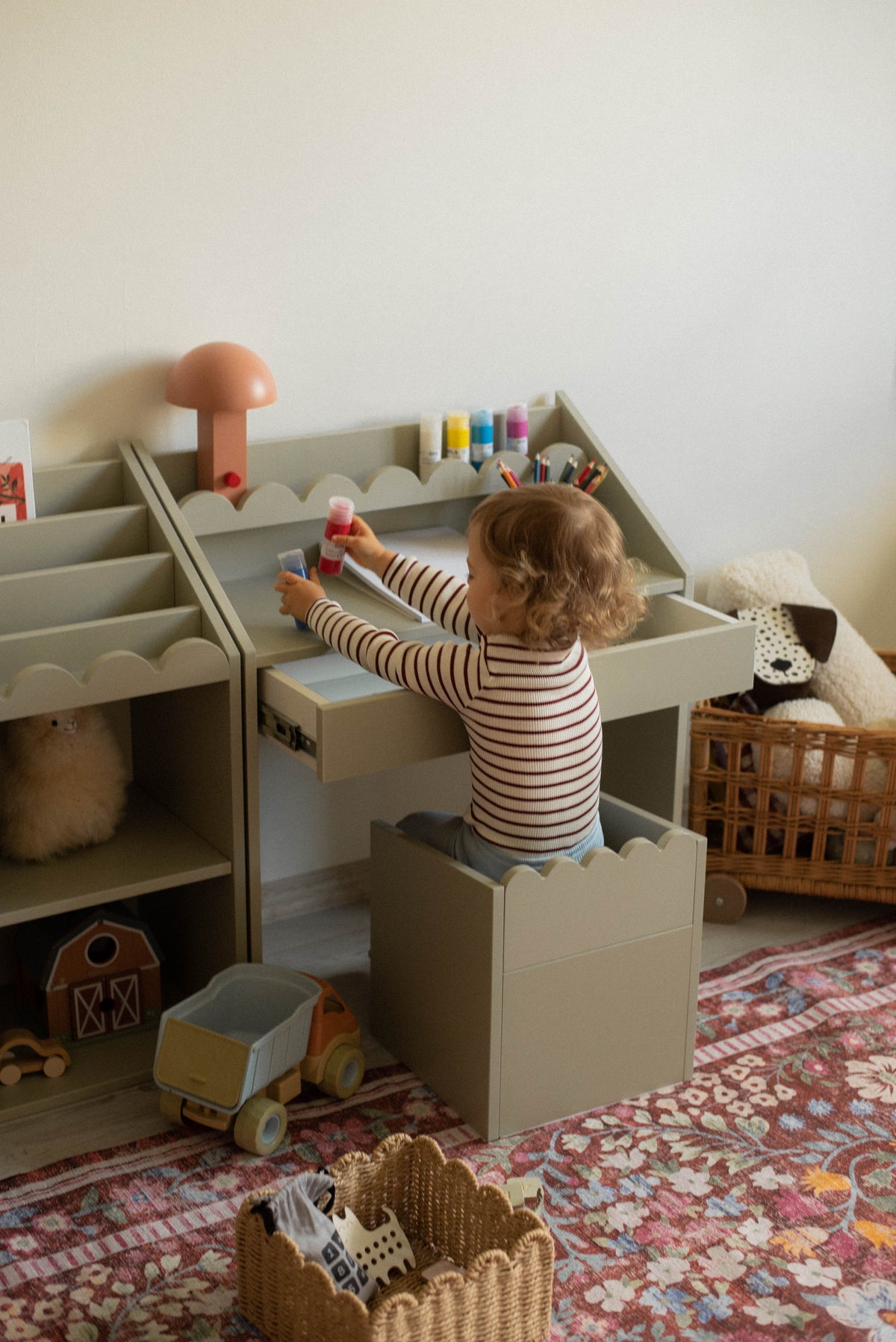
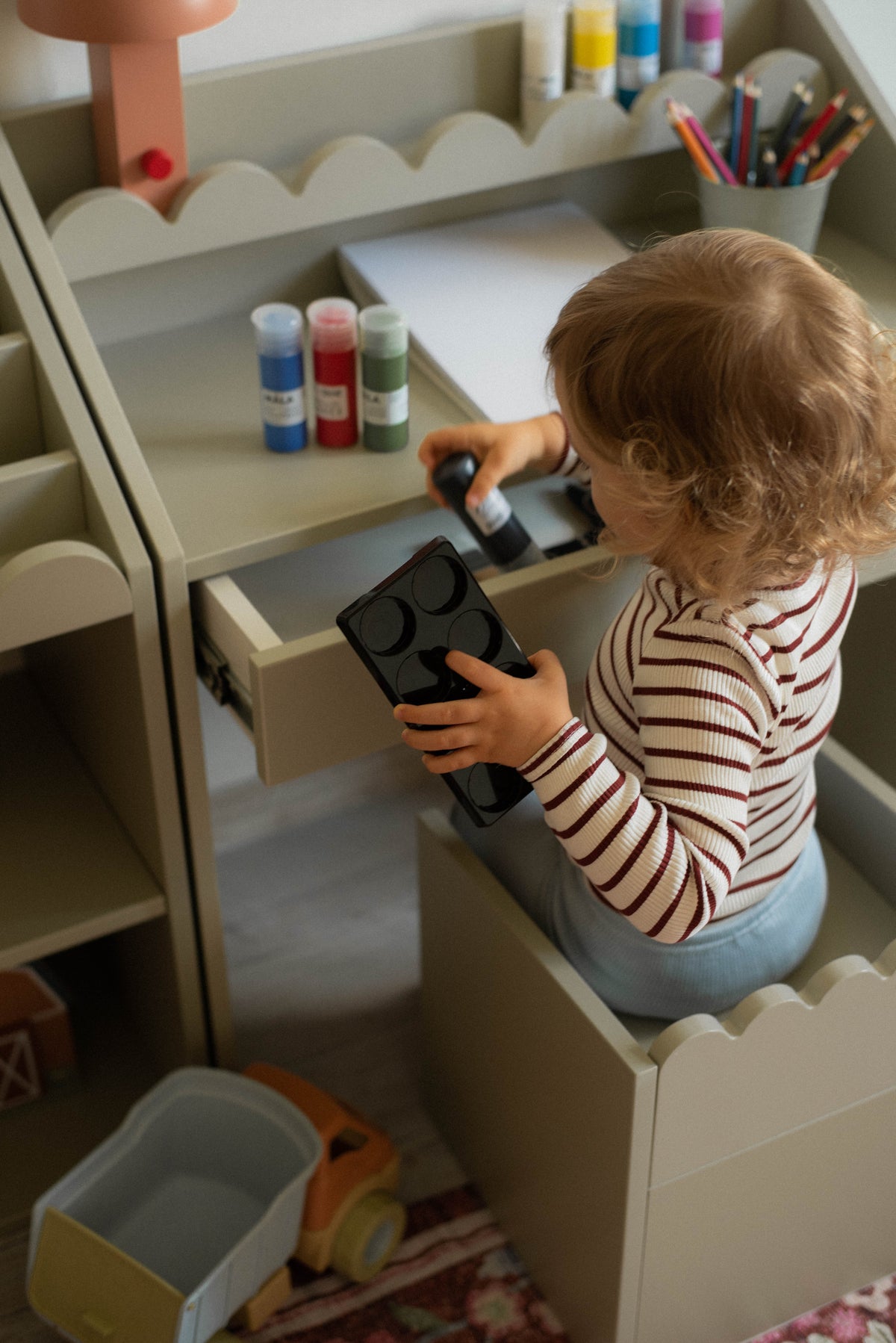
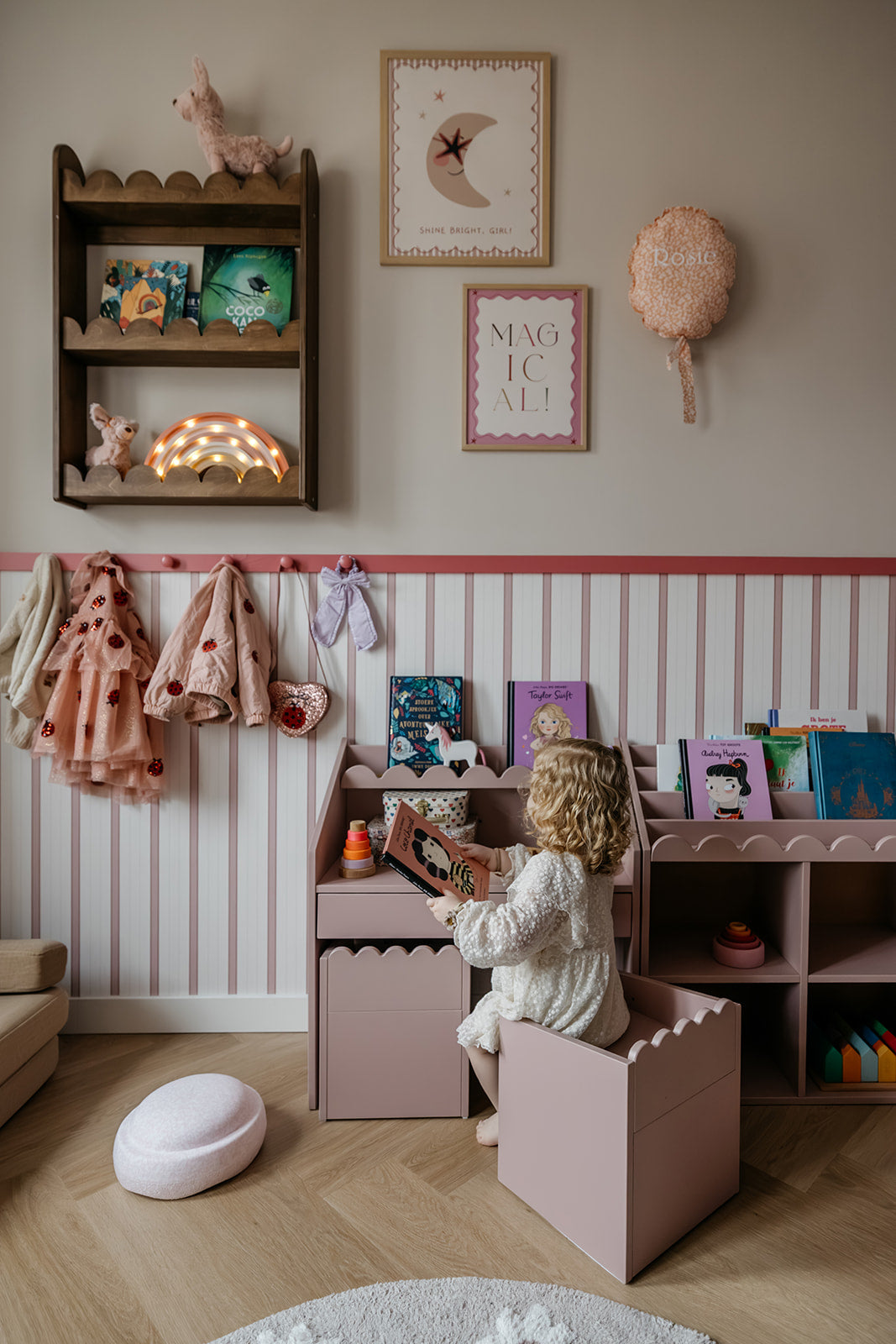
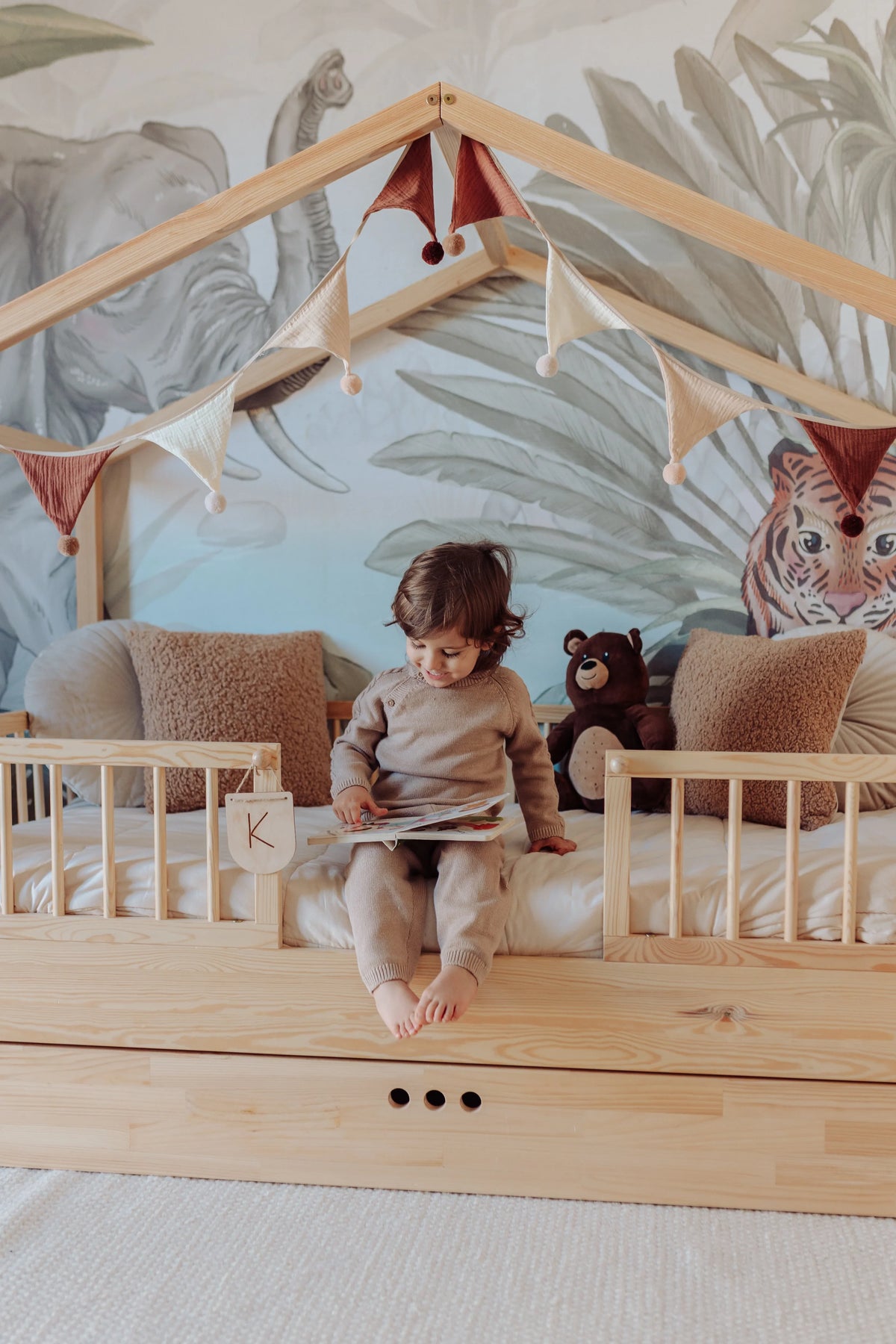
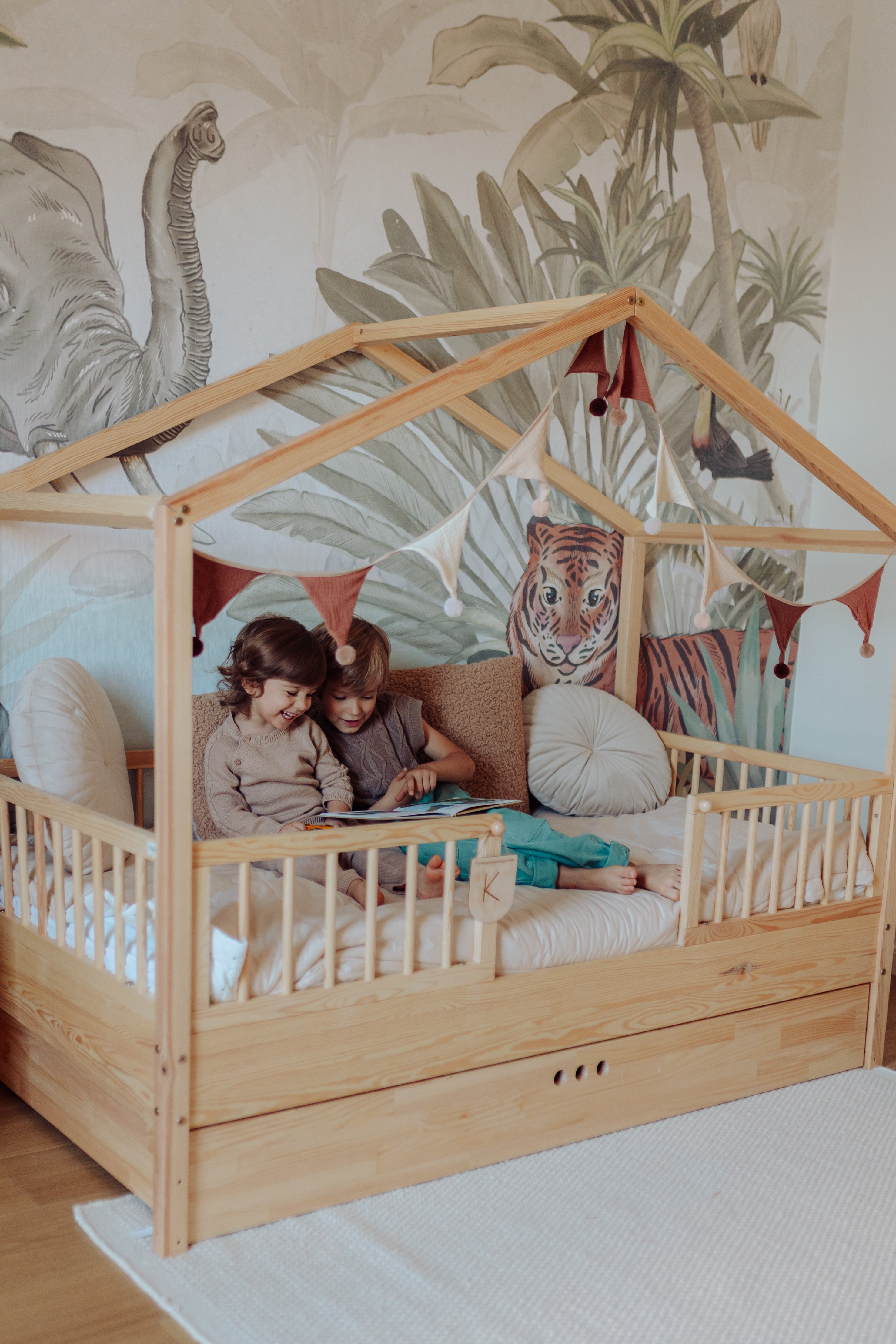
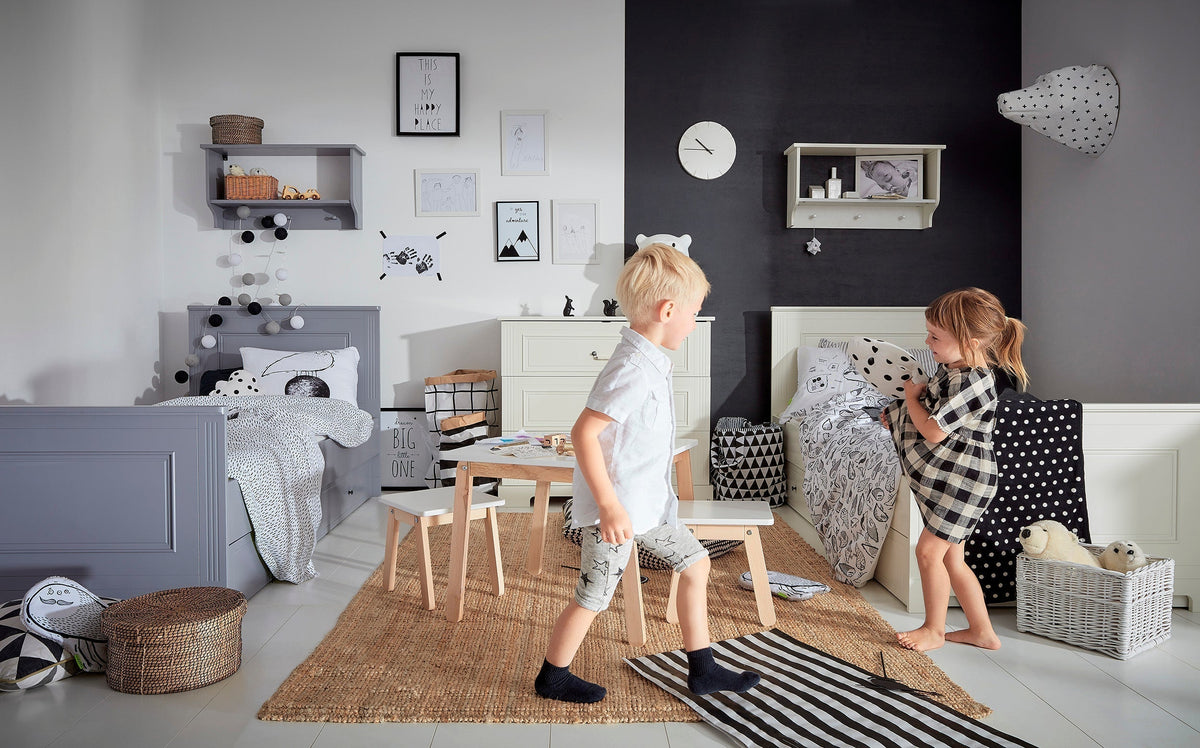
One of the basic assumptions of Montessori pedagogy is to adapt the environment to the child's capabilities. This means that the child should have easy access to their books, toys, and art supplies.
In practice, the following work well:
- low bookcases,
- open shelves,
- small tables and chairs,
- easily accessible storage spaces.
Such an organized space supports independence and encourages the child to undertake daily activities without adult help.
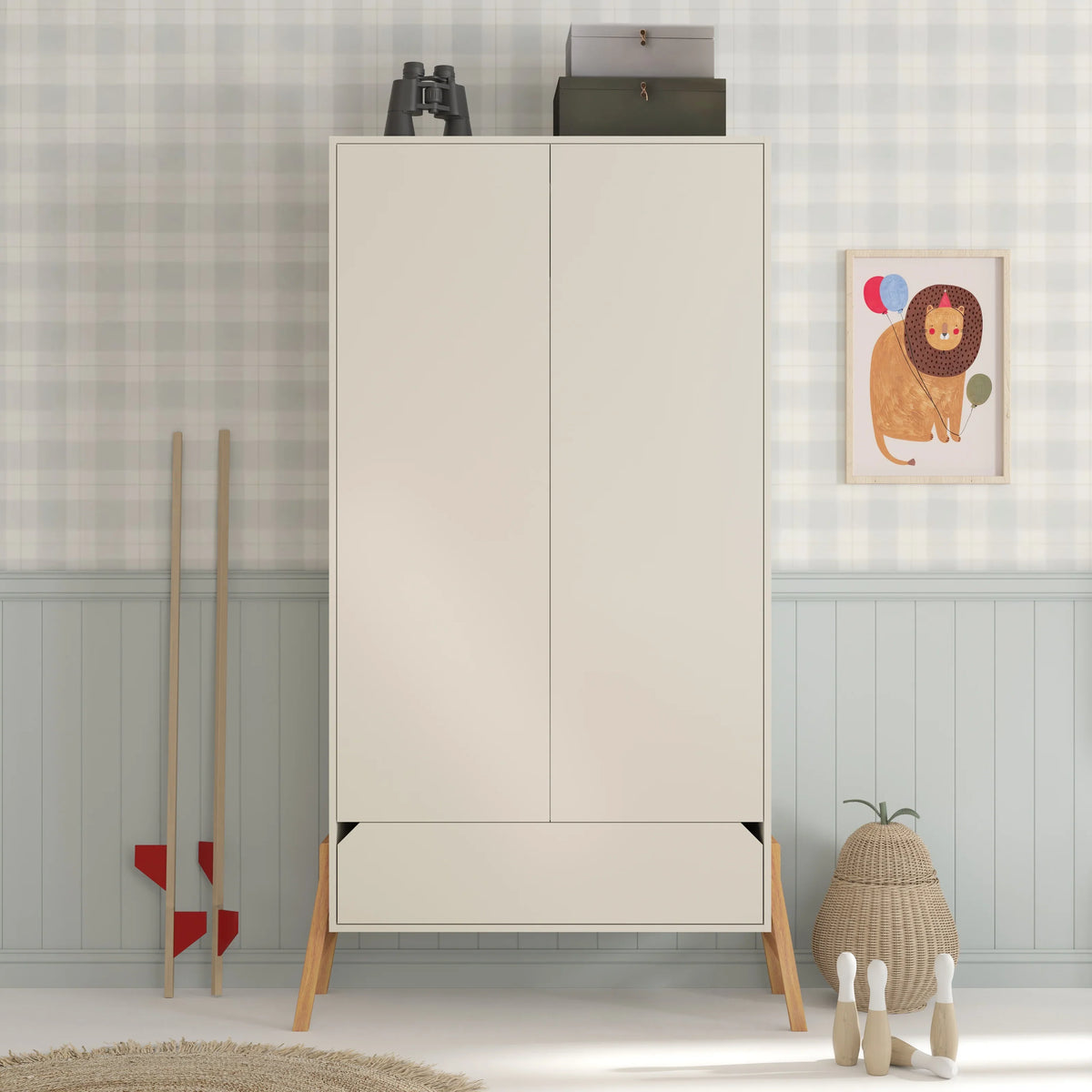
Examples of such solutions are furniture from the Book Nook collection, designed with the youngest users in mind and their natural need to discover the world.
Is it worth choosing furniture that grows with the child?
A child's room changes with the age of its occupant. What works for a two-year-old will not necessarily be suitable for a primary school student or a teenager.
Therefore, furniture that can be used for many years is gaining increasing popularity.
Their greatest advantages are:
- longer period of use,
- money saving,
- reduction of the need for frequent equipment replacement,
- possibility to adapt the room to the child's changing needs.
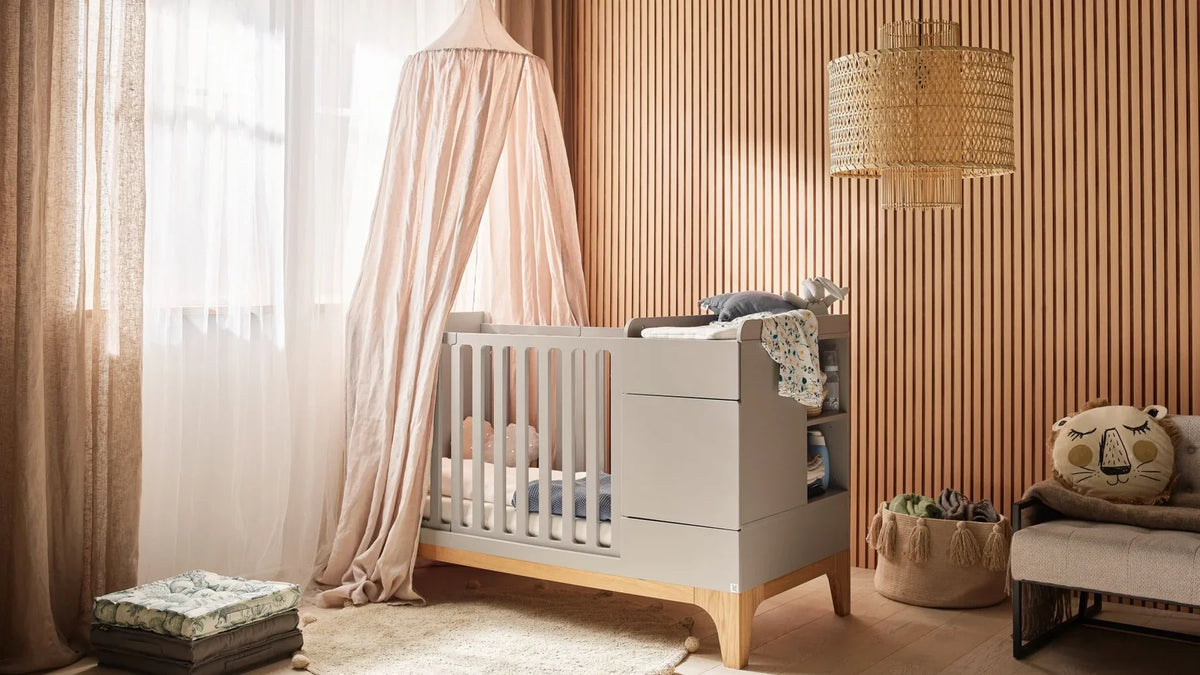
Good examples are collections such as UP!, Pinette, or So Sixty, which have been designed for many years of use and the changing needs of young users.
Common mistakes when choosing furniture for a child
Buying furniture "to grow into"
Parents often choose larger furniture with the future in mind. Unfortunately, a desk or bookcase that is too high can hinder the child's daily functioning for several years to come.
Lack of storage space at child height
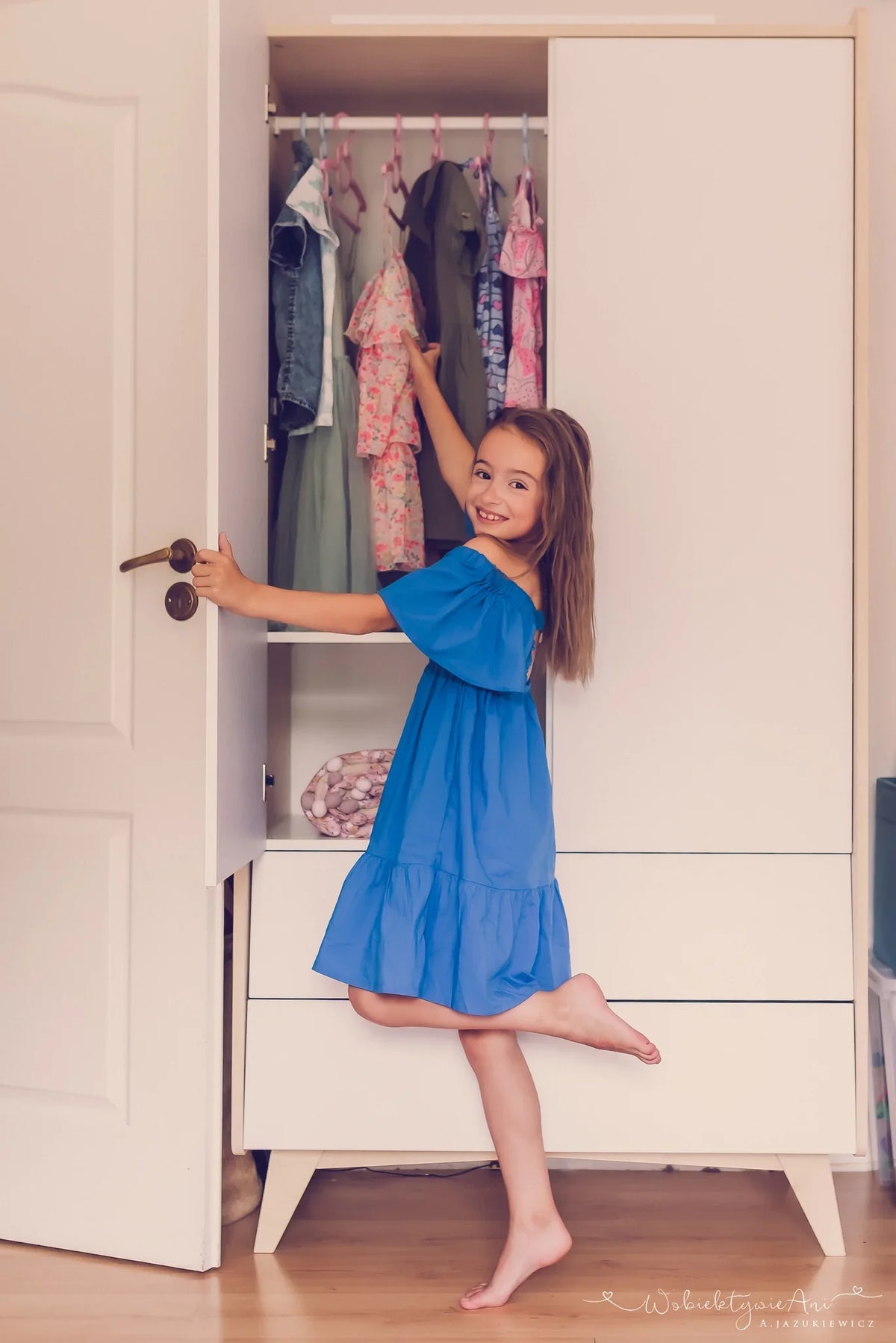
If all shelves are high up, the child constantly has to ask adults for help.
Choosing a chair without proper support
An inappropriate seat can lead to poor posture during learning and play.
Focusing solely on appearance
A beautiful room should primarily be functional, safe, and adapted to the child's needs.
Summary
Well-chosen furniture is an investment in daily comfort, healthy posture, and a child's independence. It is worth paying attention not only to the design or the amount of storage space, but above all to the dimensions adapted to the young user's current height.
When creating a child's room, it is best to follow the principle that the space should support development, not limit possibilities. An ergonomic desk, a comfortable chair, and easily accessible storage spaces will make the room functional and friendly at every stage of childhood.
FAQ
Does a desk for a first grader need to have adjustable height?
Not always. The most important thing is to properly match the height of the tabletop to the child's height. However, adjustability is a great advantage because it allows the furniture to be adapted to subsequent stages of development.
If the desk does not have height adjustment, it is worth investing in an ergonomic chair with adjustable seat and backrest. In some cases, a footrest or foot support can also be helpful, which allows maintaining a correct sitting position. During study, the feet should be stably supported, and an angle of about 90 degrees should be maintained in the ankle, knee, and hip joints. This position supports proper posture and increases comfort during homework.
How high should shelves be in a child's room?
The most frequently used items should be at a height that allows the child to reach them independently. For toddlers, the lowest shelves are usually mounted about 40–60 cm above the floor.
When can a child sleep in a larger bed?
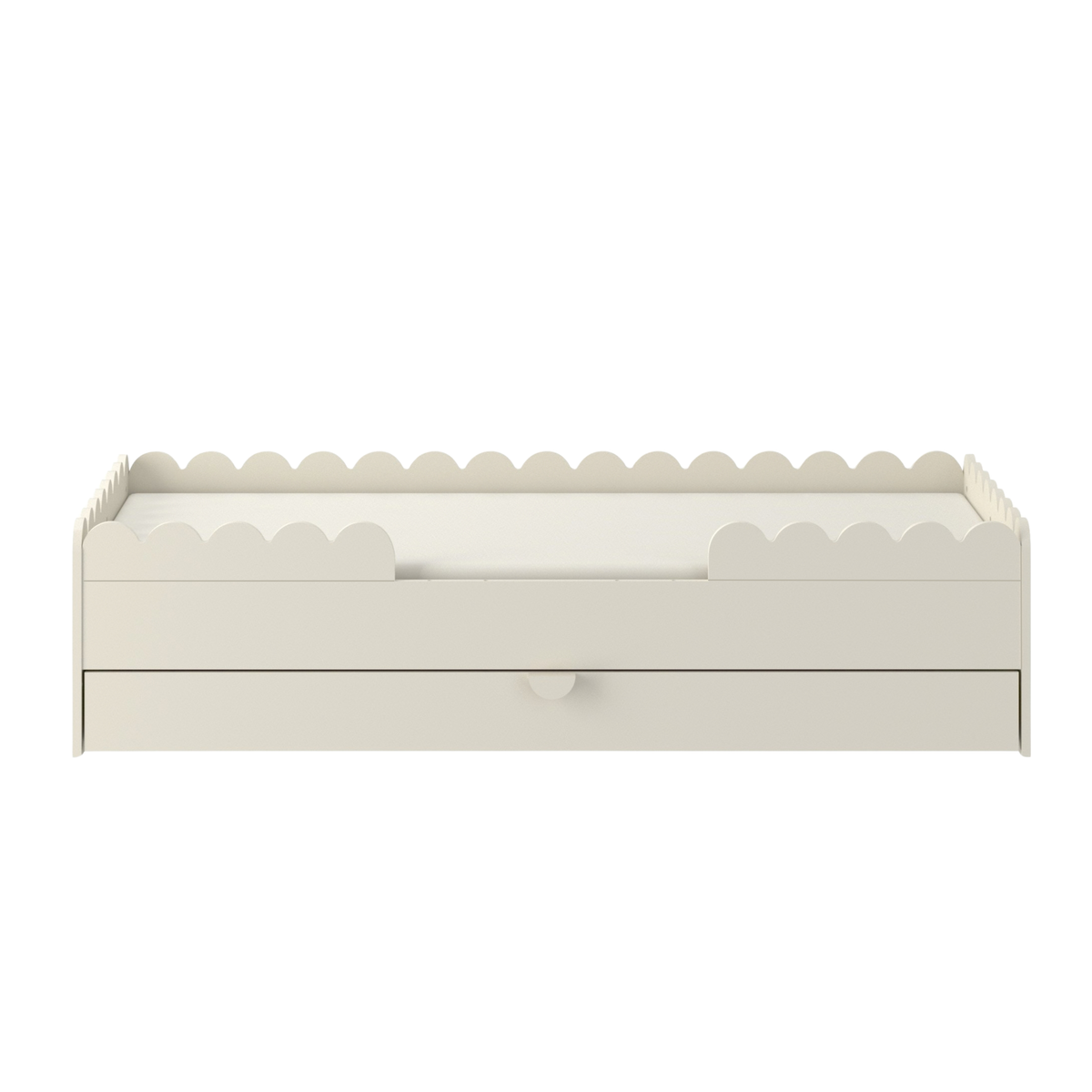
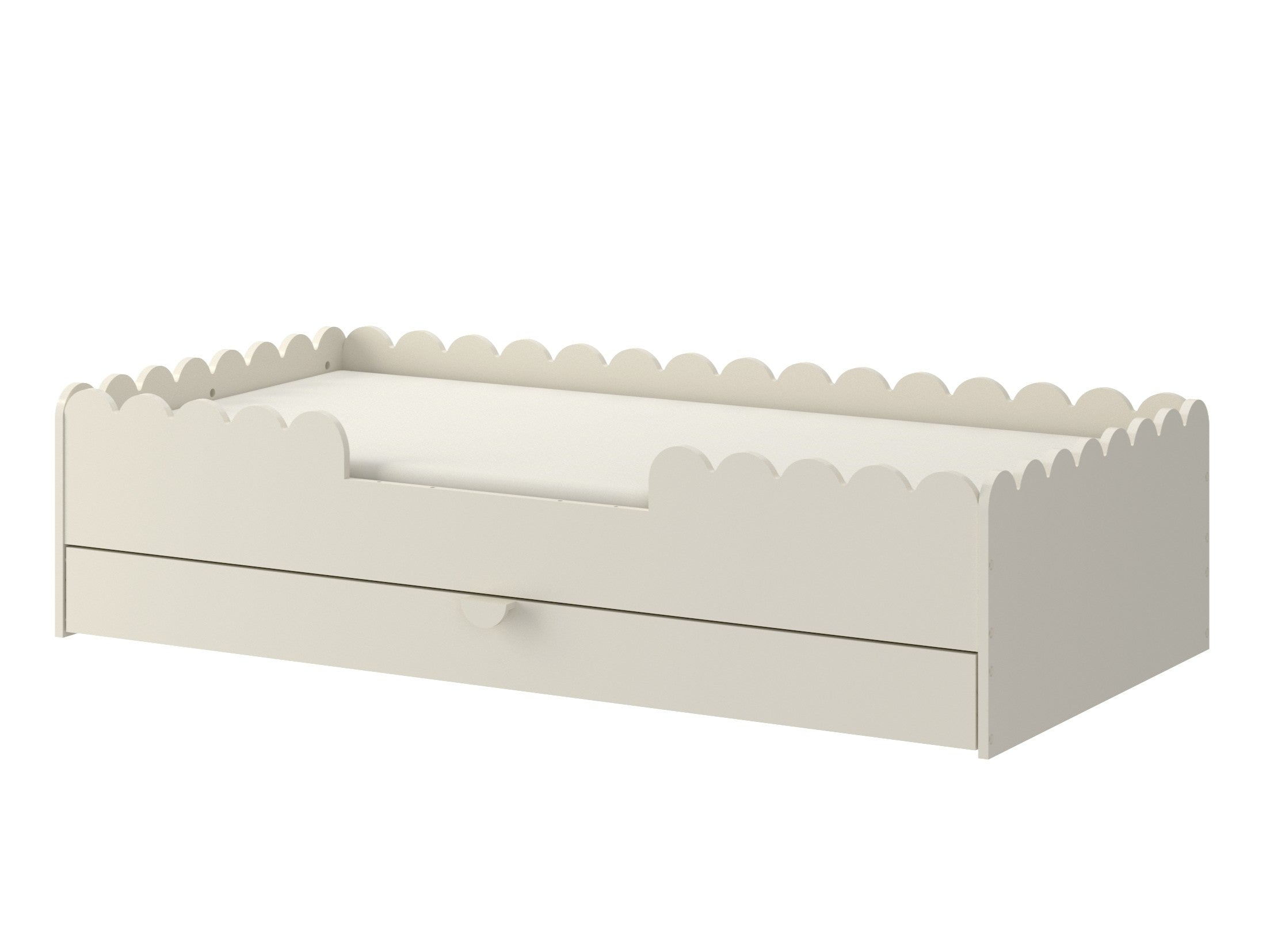
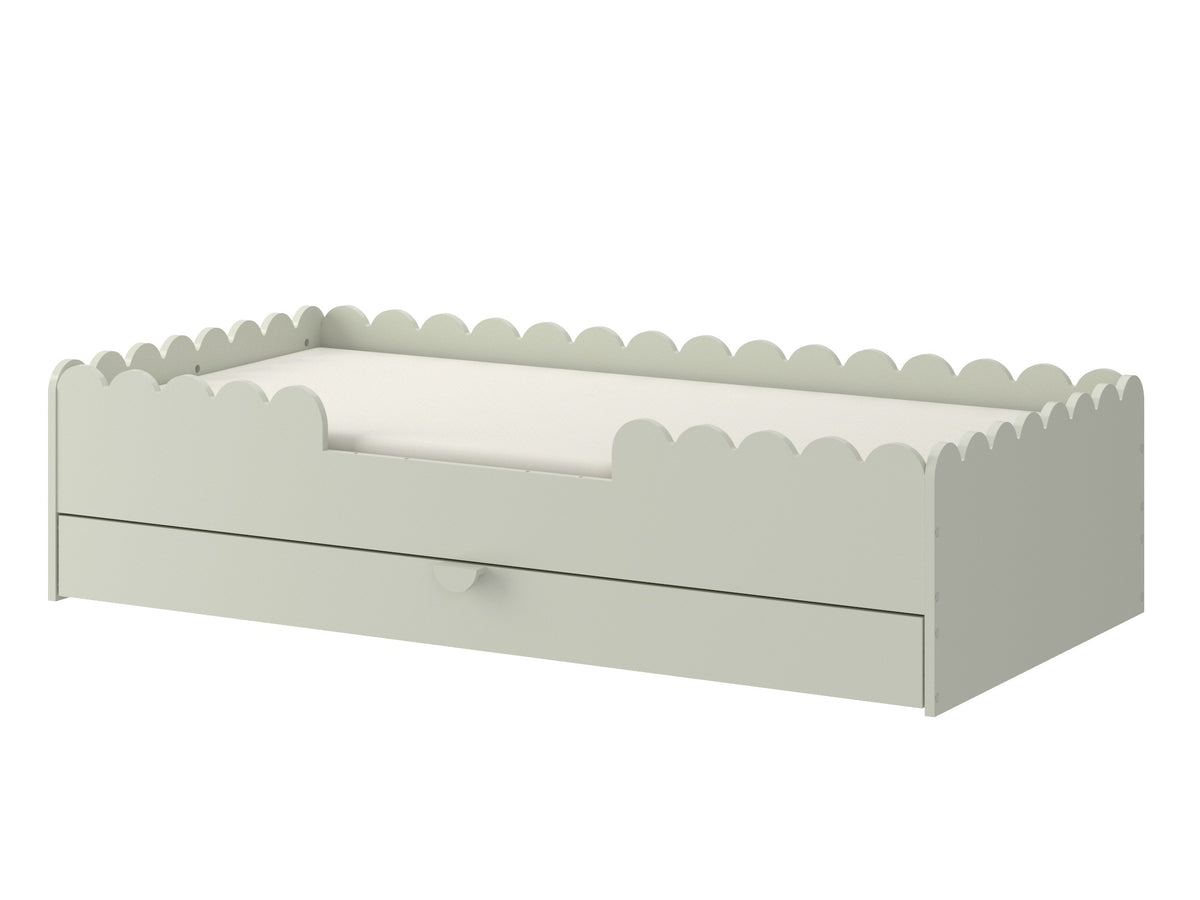
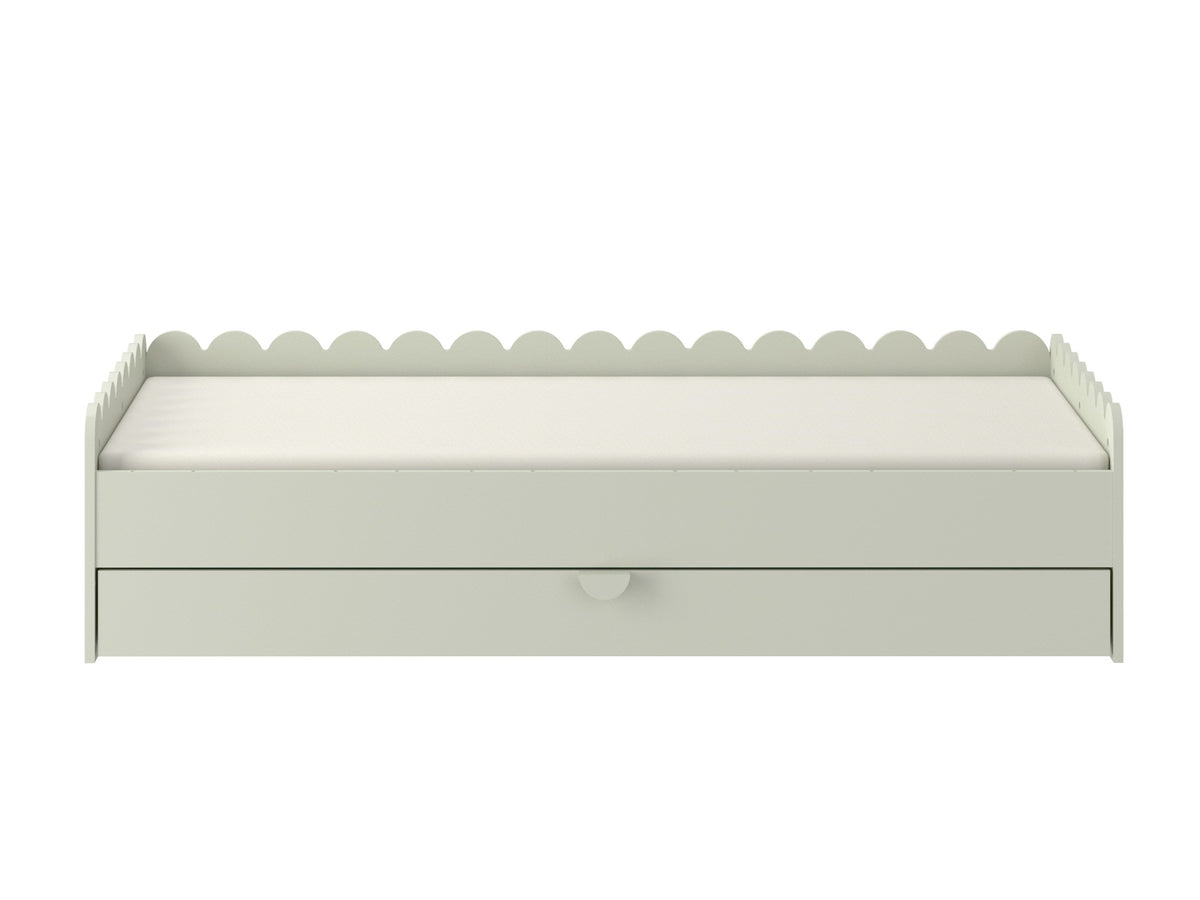
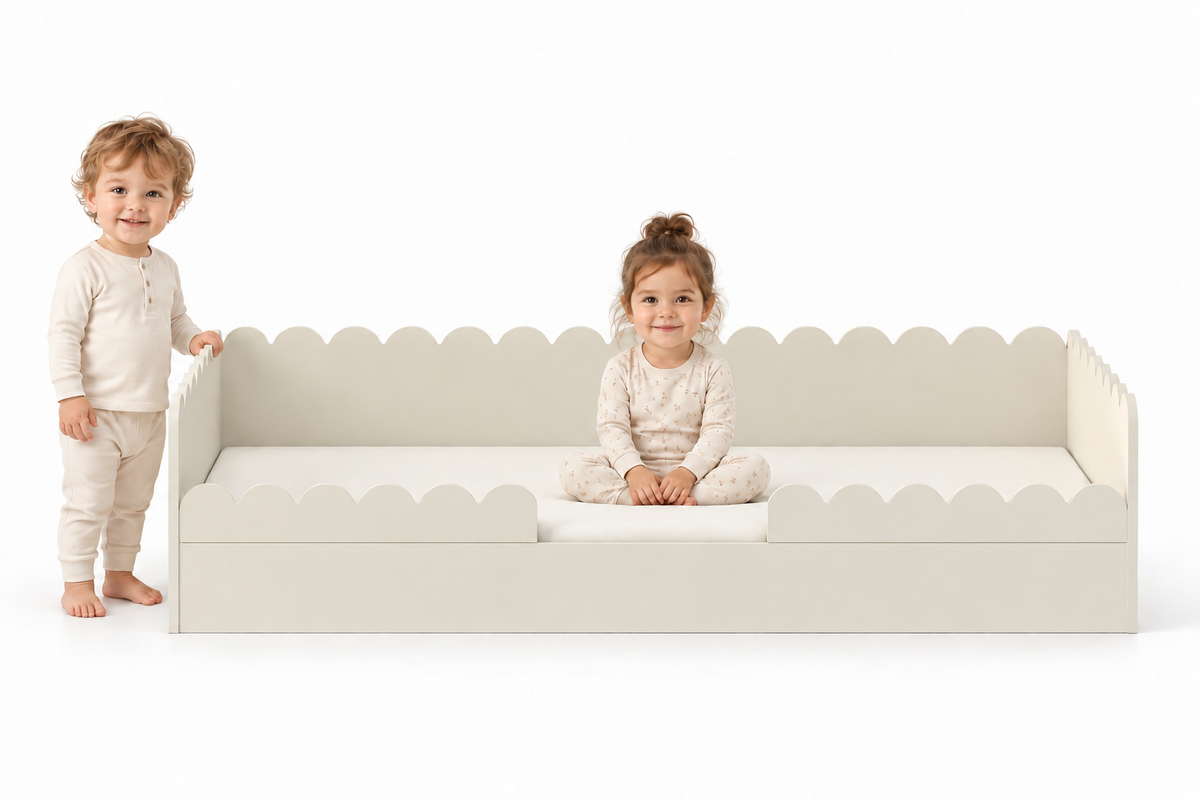
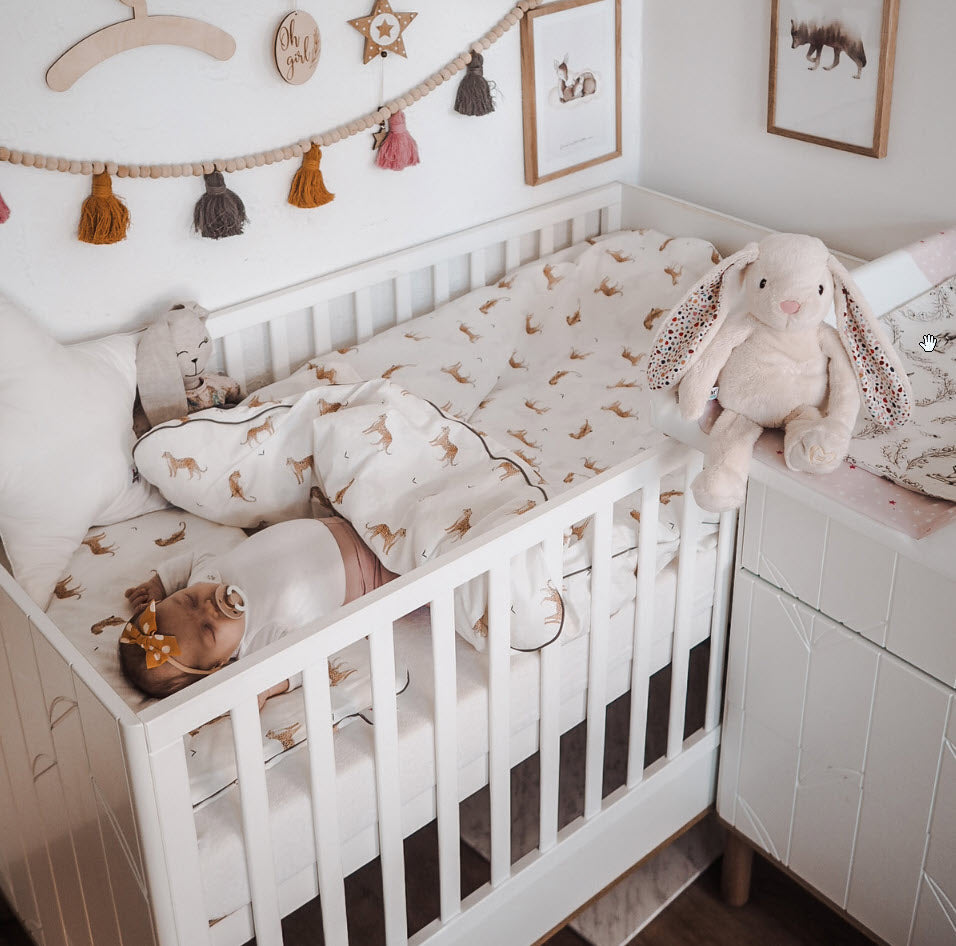
The transition from a crib to a larger bed usually occurs between 2 and 3 years of age, although much depends on the child's growth and individual needs.
How often should you check the fit of furniture to a child's height?
It is best to do this once or twice a year. During periods of intense growth, even well-matched furniture may require reassessment after some time.











Udostępnij:
Montessori on a Daily Basis - How Furniture Supports the Development of Children's Independence?
Jak udekorować łóżko domek?